Writesonic has changed more in the last two years than most AI tools change in five, and half the reviews online still describe the company that used to be. It rebranded from an AI writing app into an AI search visibility platform, which means the question is no longer just "does it write well." The question is whether drafting, SEO auditing, and brand tracking inside one subscription beats the cheaper, narrower tools that do one job each.
This Writesonic review answers that for a working publisher: what the Article Writer produces under real conditions, how Chatsonic and the SEO checker behave, where the credit metering surprises people, and which of the current plan tiers makes sense for a solo blog versus a small team. No cheerleading, no doom, just the tradeoffs as they actually present themselves.
Quick answer:What Writesonic Actually Does Now
The platform's core remains the AI Article Writer, a long-form generator that builds an outline from your topic, pulls in real-time data for factual grounding, and produces sections with internal suggestions for keywords and structure. Output arrives fast enough to change how you work: a publishable skeleton exists before your coffee cools, and the editor's SEO panel scores the draft from 0 to 100 with an improve button that suggests term additions. Speed is the honest headline here.
Chatsonic is the companion chat interface, routing between models like GPT and Claude depending on task. In practice it behaves like a capable research-and-rewrite assistant: paste a paragraph and ask for three angles, or feed it your draft and request tighter transitions. The integration with WordPress and Search Console rounds out a workflow where research, drafting, scoring, and publishing happen in one window, which is the platform's strongest argument against tool-hopping.
Writesonic plans documentationPlans and Pricing: The Bundle Is the Price
official pricing page| Plan | Annual price/mo | Headline limits | Best fit |
|---|---|---|---|
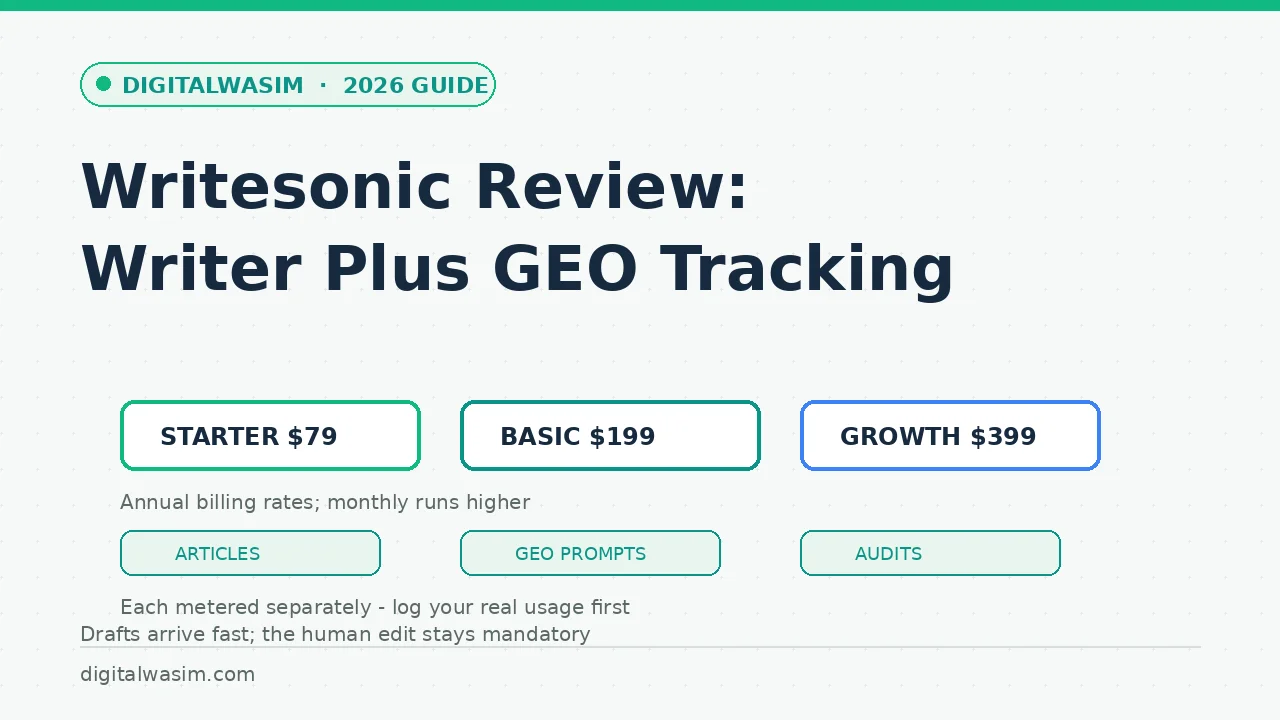
| Starter | 79 dollars | 15 AI articles, 50 tracked prompts, 1 user | Solo blogger testing the workflow |
| Basic | 199 dollars | 25 AI articles, 100 tracked prompts, 2 users | Freelancer or tiny content team |
| Growth | 399 dollars | 50 AI articles, 200 tracked prompts, 3 users | Small team with GEO ambitions |
| Enterprise | Custom | Custom limits, all platforms, strategist | Brands running visibility programs |
The step from Starter to Basic doubles the price and adds articles, prompts, and a second seat. The step to Growth doubles again and unlocks sentiment analysis. That ladder is standard SaaS, but the entry point is high for a category where capable drafting tools exist at a fraction of the price. The correct mental model: you are paying for the monitoring suite first and the writer second, so value depends entirely on whether AI-search visibility is on your actual roadmap.
Monthly versus annual billing is a bigger decision here than in most subscriptions, because the product is changing shape. Annual pricing saves around twenty percent but locks you into a tier while Writesonic keeps rebalancing what each tier includes, and reviewers across the industry have watched plan lineups shift repeatedly. The pragmatic pattern: one month at the tier you think you need, a logged record of which features you actually opened, then annual only if the usage log says so. A month of full-price truth costs less than eleven months of discounted guesses.
Draft Quality: Fast Structure, Beige Voice
Draft quality lands where most mid-tier generators land: structurally sound, factually plausible, and tonally beige. First drafts arrive with clean heading hierarchy, reasonable paragraph rhythm, and occasional confident vagueness where specifics belong. The SEO score improves coverage of related terms, but chasing the score by accepting every suggestion produces the keyword-flavored sameness that readers and search systems both punish. The winning pattern is generate, then rewrite the first 40 percent yourself, because openings set voice and the tool's defaults are weakest exactly there.
Fact-checking is non-negotiable despite the real-time data claims. In testing, statistics arrived without sources or with sources that did not support the number at that precision. For a blog that cites regulators and primary documents, every number in an AI draft needs a link you have clicked yourself. This is not a Writesonic flaw specifically; it is the physics of language models. But the marketing emphasis on accuracy can lull newer publishers into skipping the verification pass that keeps their site trustworthy.
The workflow that makes output publishable looks nothing like one-click generation, and tool buyers who skip it blame the tool. A realistic sequence runs: research and brief first, so the model has constraints worth following; outline review second, trimming sections that do not serve the search intent; draft third, accepting structure while rejecting fluffy sentences inline; then the human pass, which adds examples, rewrites the opening, and verifies every claim. Publishers running the disciplined version of this loop get genuinely faster publishing. Publishers skipping it get faster production of the generic content that search systems increasingly ignore, which is the expensive kind of speed.
The Supporting Cast, Credits, and the GEO Question
The supporting cast matters more than the marketing suggests, because each product solves a real blogger task. Chatsonic handles research-and-rewrite chat across models, which covers the daily iteration work. Botsonic builds site chatbots trained on your pages, useful when support questions repeat. Photosonic generates blog images, Audiosonic turns posts into audio, and the plagiarism checker plus AI text humanizer round out the editing loop. None of these individually justifies the subscription, but the bundle explains why the platform prices itself above single-purpose writers: you are buying the whole bench, not one player.
The credit system is where expectations meet operations, and it deserves its own section. Articles, tracked prompts, and audits each carry separate monthly caps, and regeneration consumes quota, so a month of iterating on one long guide can eat allocations that a batch-and-move-on workflow would have spread across ten posts. Model selection affects burn rate as well. The practical advice: spend month one on monthly billing, log your actual consumption, and only then decide whether annual pricing of any tier makes sense for your real pattern.
- Draft one real post from brief to final edit and track how many generations it took.
- Check which model the quality you need actually requires, then price that model's burn rate.
- Decide honestly whether GEO tracking is on your six-month roadmap or a nice-to-have you will never configure.
- Compare the total against a cheaper writer plus a separate rank tracker before committing.
The GEO story deserves a sober paragraph of its own, because AI search visibility is the platform's main pitch and the least understood feature. The tracking genuinely works: it reports which prompts surface your brand in AI answers, with sentiment and competitor context on higher tiers. The open question is what you can do with the report, because the levers for improving AI citations are still mostly the same fundamentals that earn regular rankings: clear sourcing, structured content, and genuine authority. Buy the monitoring if visibility reporting is now part of your job. Skip it if you would read the dashboard twice and then keep publishing the way you already do.
Who Wins and Who Is Overpaying
AI prompts for blog writing guide AI writing tools comparison Rytr reviewIf you do trial it, trial with a real project rather than a demo topic. Pick the article you would have written next month, run it through the full loop from outline to SEO score to edit, and judge three things honestly: how much rewriting the draft needed, whether the scoring suggestions improved the piece or just inflated it, and whether any visibility report changed a decision you actually made. That single tested article teaches you more about fit than any comparison table, because the tool's value depends entirely on how close its output lands to your standards with your editing budget. Most publishers know within one project whether the platform belongs in their stack.
step-by-step post writing guide