Every keyword research tool promises ideas, and most deliver spreadsheets. The SEMrush Keyword Magic Tool earned its name by structuring those ideas: type a seed term, and the database returns thousands of related keywords grouped into clusters that read like a content plan someone thoughtful already outlined for you.
This guide walks the working workflow from seed to published plan: choosing seeds that branch well, reading the columns honestly, filtering without strangling the data, building clusters into your calendar, and exporting targets that survive contact with a writing week. It assumes no prior SEMrush experience and ends with the judgment calls that separate useful research from decorated procrastination.
Quick answer:Seeds: The Highest-Leverage Decision
SEMrush Knowledge BaseGood seeds share two traits: searchers actually use the phrase, and it branches. Budget vps hosting branches into providers, comparisons, and definitions; best cloud 2026 branches into nothing useful. Write the seed as your audience speaks, check the first hundred results for coherence, and if the mix looks wrong, the seed was wrong, not the tool.
Country and database matter more than beginners expect. Volumes differ enormously across markets, and a global view blends audiences that behave differently. Research the market where your readers live, switch databases deliberately, and remember that a term showing 40,000 searches globally might mean 2,000 in the country that can actually become your traffic. The reverse also holds: a small national market with weak competition is often the faster first beachhead than a global term defended by international brands, which is a sequencing insight most keyword guides skip entirely.
Before typing anything, spend two minutes on seed hygiene. Write down the question your audience asks in their words, strip brand language, and note the variants different segments use: beginners say cheap, professionals say cost-effective, and the tool treats those as different seeds returning different clusters. Run both when in doubt. The two minutes of audience thinking upstream save forty minutes of sifting downstream, because everything the tool shows you afterwards branches from whatever you typed first.
Reading the Columns Honestly
SEMrush feature pages| Column | Read it as | Working use |
|---|---|---|
| Volume | Demand estimate | Sizes the cluster's ceiling |
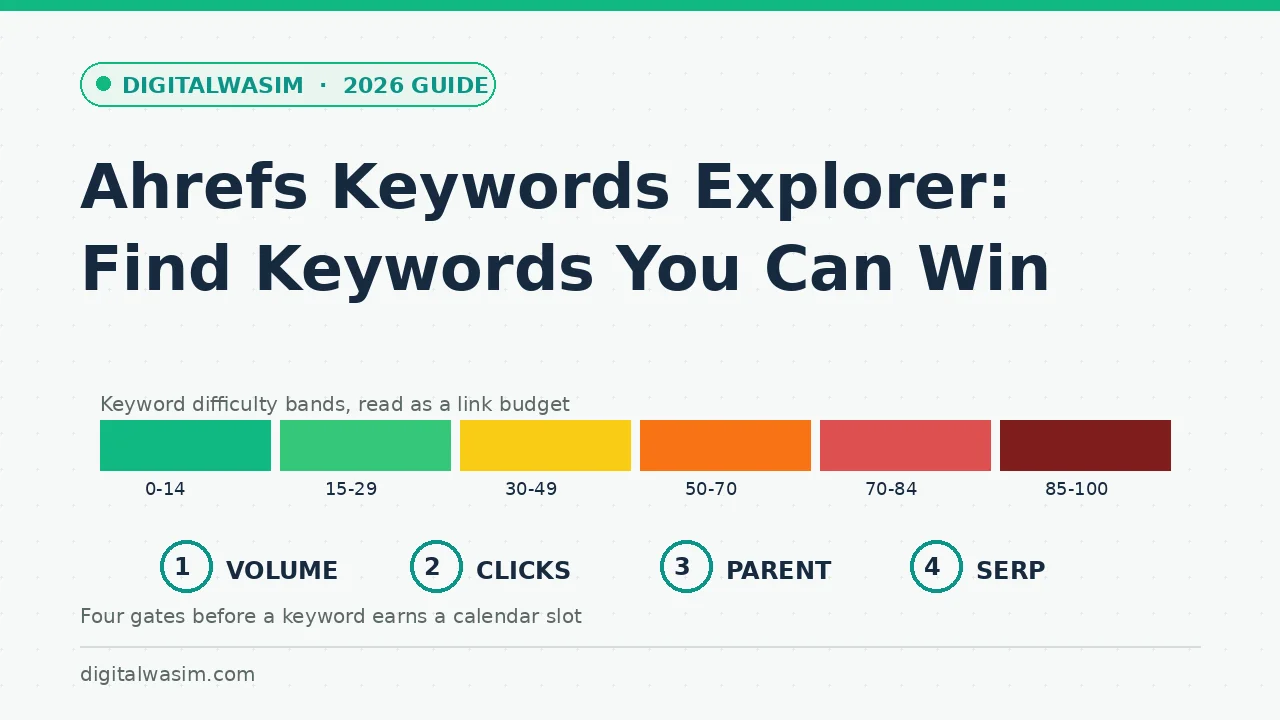
| KD percent | Top-10 strength estimate | Grades whether to fight now or later |
| Intent | Searcher's purpose | Matches content type: guide, review, page |
| CPC | Advertiser competition | Signals commercial value, ad research only |
| SERP features | Special results present | Snippets and questions you can win |
Clusters, Filters, and the Export Loop
Clusters are the tool's signature. Related keywords group automatically into themed buckets on the left panel, and clicking one filters the report to that group. The practical move is selecting clusters that match publishable angles: one cluster becomes one comprehensive post, its primary keyword leading the title, its variants feeding headings and body coverage. The grouping also exposes cannibalization before it happens, because two planned posts drawing on the same cluster will compete with each other, and merging their briefs at planning time costs minutes while untangling two published competitors costs months.
Filters trim the map before it becomes homework. Set a volume floor so trivial terms do not distract, cap difficulty by your site's real strength rather than ambition, include the question-type keywords that make FAQ sections, and exclude terms whose intent your content cannot serve. Filters are iterative: loosen when results starve, tighten when the list grows beyond a quarter's worth of posts. The discipline that separates useful filtering from wishful thinking is anchoring to evidence: your current rankings, your domain's age, and the content you have already published prove what difficulty band you win in today, and expanding that band one step at a time beats leaping into SERPs your site cannot yet contest.
content calendar guideThe Keyword Manager turns exports into a living workspace. Saved keyword lists update with fresh metrics, accept notes and tags, and feed the position tracking when posts go live, which closes the loop between planning and measuring. The practical structure that works: one list per cluster, tagged by target month, with the chosen primary keyword marked so future-you knows the decision already made. Lists that live in exports rot; lists that live in the manager compound, and the difference is five minutes of upkeep per month.
A Worked Loop and the Common Mistakes
A worked loop shows the rhythm. Seed: blog hosting. First pass filters: volume above 100, difficulty below 40, informational intent. Clusters that surface: shared versus VPS comparisons, WordPress-specific hosting questions, migration guides, cost explainers. Cross each against your existing pages, keep what you have not covered, and vet the survivors in Keyword Overview, checking the SERP for weakness patterns before committing. An hour of this yields a quarter of content targets with confidence attached, and the same loop repeats for every topic area the site covers, with the only variable being the seeds you feed it.
blog writing guide SEMrush review Ahrefs Keywords Explorer guideVolume this into a quarter and the tool's purpose completes. One planning session, six seeds from your topic areas, the same filter discipline, and a shortlist of maybe forty clusters scored by demand and difficulty. Sort into twelve publishable targets, hand each cluster a calendar row, and the next three months of writing decisions are already made, argued with data, and immune to Monday-morning improvisation. That is the difference between owning a research tool and owning a content pipeline, and it is entirely a process choice, which is why two publishers with identical subscriptions end the year in completely different places: the tool never changes, the loop does.
content refresh strategyOne comparison keeps expectations calibrated: the tool is a map, not a oracle. Its estimates come from panels, clickstreams, and modeling, which means rare queries and fast-moving topics run thin, and brand-new searches appear late. The publishers who get the most from it treat surprising numbers as questions to verify, not verdicts to obey, cross-checking anything material against the actual SERP before committing a writing day. Map-reading with a critical eye beats map-worship in every terrain, and keyword data is no exception.
The verdict fits in two sentences. The Keyword Magic Tool turns keyword research from list-making into map-reading: seeds branch, clusters become posts, and filters grade the fight before you commit a writing day. Master the seed, read the columns with honesty, and export into a calendar; the thousand targets were always there, waiting for a plan.