The same article, the same words, the same traffic. In September, a thousand page views on that page earned you six dollars, and in December the identical thousand views paid twelve. Nothing on your side changed. What changed is the auction running above your content, and that auction follows a calendar.
Publishers give this stretch a name for a reason. The Q4 ad RPM season runs from October through December, when advertiser demand peaks and every impression on your blog sells for more. Knowing why it happens tells you what to do about it, and equally what not to panic about in January.
This guide explains the demand mechanics, walks the season month by month, and lists the preparations that still matter before the peak. Every number carries its source and as-of date, and the one illustrative calculation is labeled as such.
Quick answer:Five facts anchor everything that follows, and each one traces to a named source.
| Fact | Number | Source (as of) |
|---|---|---|
| Highest-earning quarter in digital advertising | Q4, as advertiser budgets peak and CPMs spike | Mediavine publisher blog (Jun 30, 2026) |
| US online holiday sales, 2025 season | $257.8 billion, up 6.8% year over year | Adobe Analytics actuals (Jan 2026) |
| US holiday online sales forecast, 2026 season | $275.1 billion, up 6.7% | Adobe Analytics forecast (Sep 28, 2026) |
| Alphabet Q4 2025 advertising revenue | up 14% year over year | Alphabet Q4 2025 results (reported Feb 4, 2026) |
| AdSense payment window each month | between the 21st and the 26th | Google AdSense payment timelines (checked 28 Oct 2026) |
What Page RPM Measures Before You Blame the Calendar
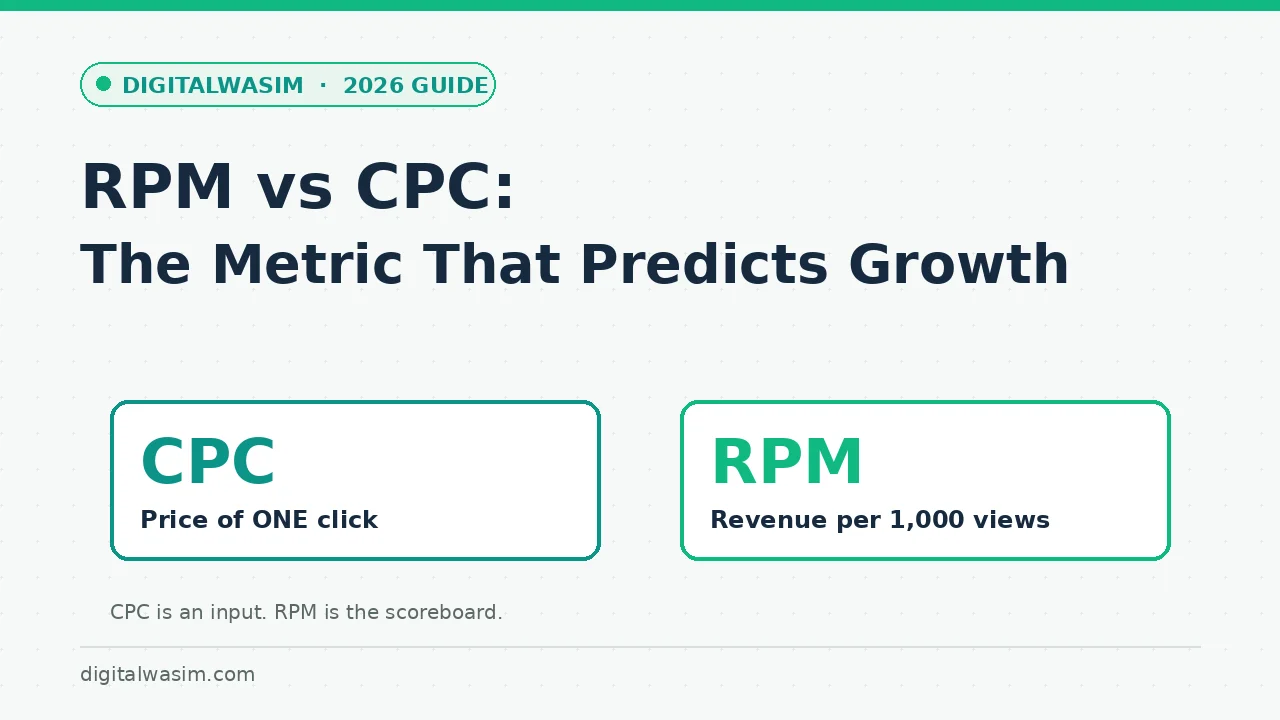
Page RPM divides your estimated earnings by page views and multiplies by 1,000. A $6 page RPM on 1,000 views pays six dollars, and the same views at $12 pay twelve. RPM bundles several moving parts into one number: the CPMs advertisers pay, the fill rate of your slots, and your share of that revenue.
Your share has a published floor with AdSense. Google's help pages put the publisher share at 80 percent of advertiser-paid revenue after the buying platform's fee. When the buyer is Google Ads for display, that share lands near 68 percent. We re-checked both numbers on 28 October 2026. What swings month to month is the other half of the equation, the auction demand. That is the part the calendar controls.
AdSense approval for a new websiteOne caution keeps this metric honest. RPM averages hide which pages and geographies earn, so a rising site-wide number can mask a falling one on your money pages. Read RPM alongside page-level reports in analytics rather than on the dashboard alone, and treat any sudden jump as a question, not a victory.
Why October to December Pays More: The Demand Timeline
Mediavine manages ads for thousands of independent publishers, so its read on the market carries weight. The company states plainly that Q4 is the highest-earning quarter in digital advertising. Its stated reason: advertiser budgets peak, demand rises, and CPMs spike significantly. That post appeared on the Mediavine blog dated June 30, 2026. It also matches basic auction behavior, because more bidders chasing the same slots drives prices up.
The bidders chase shoppers. Adobe Analytics measured US online holiday sales at $257.8 billion for the 2025 season, up 6.8 percent. Its forecast from September 28, 2026 puts the 2026 season at $275.1 billion. Retailers raise bids to reach those shoppers, brands with annual budgets spend down unspent allocations before year end, and agencies pile in with holiday campaigns. Each of those behaviors raises the clearing price of an impression on your blog.
The platform numbers confirm the pattern at scale. Alphabet reported its Q4 2025 advertising revenue up 14 percent year over year on February 4, 2026, its strongest quarter on record. When the largest ad platform in the market posts its best quarter inside October to December, the seasonal curve is not a publisher superstition. It is the industry's balance sheet.
A Month-by-Month Rhythm You Can Plan Around
Seasonality is a slope, not a switch, and the slope has known bends. The table below compresses the typical rhythm, with the January behavior sourced from Mediavine's Q1 publisher guidance by Brad Hagmann, dated January 16, 2026.
| Month | What usually happens | What it means for you |
|---|---|---|
| October | holiday campaigns begin, rates climb from Q3 levels | finish layout and speed work before this month ends |
| November | demand builds to a Black Friday and Cyber Monday peak | keep pages stable, watch for ad code conflicts, publish shopping-adjacent content early |
| December | strong rates through mid-month, softening after December 25 | expect the year's best RPM weeks early in the month |
| January | budgets reset, often the softest stretch of the year | plan maintenance and experiments, not revenue comparisons |
Two caveats belong next to that table. First, no two years bend identically, and a weekly dashboard tells you more than any calendar. Second, Mediavine's guidance notes that seasonality is not universal. Some verticals, such as health and fitness, see strong demand in Q1 when everyone else cools. Your niche can bend the curve in either direction.
A quick illustration shows the stakes, and this example is arithmetic, not data. If your site serves 30,000 page views in December at a $12 page RPM, the month earns $360. The same 30,000 views in January at a $7 RPM earn $210. Nothing about the site changed between those two invoices, which is exactly why the calendar deserves respect.
How to Prepare Your Blog for the Q4 Ad RPM Season
Preparation multiplies whatever the auction gives you. Four moves cover most of the value, and all four belong in September or early October.
Refresh the pages that will carry the season. Freeze your layout when the peak arrives. reducing bounce rate guide Google Analytics guide for bloggers Convert seasonal traffic into owned audience. Balance ad income with other streams. earning from a blog without AdSenseThe January Drop Is Normal, Not a Penalty
Every February inbox contains the same worried email, so here is the answer in advance. Mediavine documented the pattern in its Q1 guidance dated January 16, 2026. When budgets reset in January, advertisers ease back into the market and eCPMs cool off. The company's timeline is specific: January is often the softest stretch, February improves gradually as advertisers re-enter, and momentum builds through March. A 40 percent RPM decline from December to January can reflect the market, not your content.
Payout timing adds one more illusion to unwind. AdSense finalizes December earnings in early January and issues payment between the 21st and 26th of the month, per Google's published payment timelines. So your biggest earning month pays out in late January, while January's thin balance pays in late February. The cash lag makes the seasonal dip look twice as dramatic on a bank statement.
comparison of blogging platformsQuestions Publishers Ask About Q4 Ad RPM
What is a good page RPM for a blog?
There is no universal number, because RPM depends on niche, geography, season, and layout. A lifestyle blog with US traffic can run several times the RPM of an entertainment blog with mixed geographies in the same quarter. Judge your RPM against your own trailing twelve months, and treat a Q4 figure against the same month last year.
Why do my ad earnings drop every January?
Advertiser budgets reset at the calendar year, and January competition for impressions drops as brands plan and agencies ramp slowly. Mediavine's Q1 guidance describes January as often the softest stretch, with recovery through February and March. The drop mirrors the Q4 spike you just enjoyed, and it is not a demotion of your site.
When does AdSense pay December earnings?
December's finalized earnings ride the regular monthly cycle and land between the 21st and 26th of January. Your balance must clear the payment threshold, and no holds can apply. Google documents this monthly cycle on its AdSense payment timelines page. Plan cash flow with that lag in mind, because the season's biggest month lands in the new year.
Which months have the highest ad RPMs?
For most content niches, mid-November through mid-December holds the yearly peak, powered by Black Friday and holiday shopping demand. The exact high-water week moves from year to year, and some verticals peak outside the pattern, with fitness demand rising in January. Compare your own months across two years before locking a theory.
Does higher traffic or higher RPM earn more in Q4?
Both multiply together, so the weaker factor caps the other. Ten thousand views at a $12 RPM beat forty thousand views at a $2 RPM. Chasing RPM alone by stacking ads usually slows pages and costs traffic. In practice, protecting user experience while traffic rises is the combination that wins the season.
The honest summary of the season is short. Q4 pays more because everyone with a budget is buying at once. January pays less because they have all gone home. Prepare your pages early, hold your layout through the peak, and spend the trough on improvements. Then the calendar works for you in both directions.